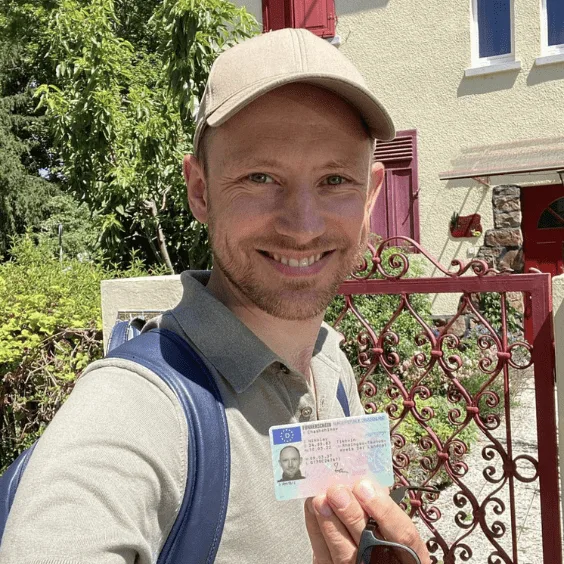
How to Legally Obtain a German Driving License
Getting a driving license in Germany is a procedure that is renowned for its rigor and thoroughness. The German system stresses road security and motorist competence, guaranteeing that only skilled drivers are allowed on the roads. For many migrants and homeowners looking to navigate the stunning German landscapes, getting a driving license is an essential step. This article will detail the legal pathways to obtain a German driving license, consisting of requirements, processes, and resources.
Requirements for a German Driving License
Before diving into the specifics, it is crucial to understand the basic requirements for obtaining a German driving license. Here is a table summarizing these prerequisites:
| Requirement | Details |
|---|---|
| Age | Minimum 18 years old (17 for accompanied driving) |
| Residency | Must legally reside in Germany for a minimum of 185 days |
| Health Certificate | Get a medical and vision assessment |
| First Aid Course | Completion of a standard first help course |
| Proof of Identity | Valid passport or nationwide ID |
| Fees | Costs differ (see information below) |
Types of Driving Licenses in Germany
Germany provides a number of categories of driving licenses, each corresponding to different vehicle types. Below is a table that outlines the primary kinds of driving licenses offered in Germany:
| License Type | Vehicle Types |
|---|---|
| Class B | Cars and trucks up to 3.5 loads, including towing |
| Class A | Motorbikes, with some limitations |
| Class C | Trucks over 3.5 tons |
| Class D | Buses |
| Class E | Trailers over 750 kg when attached to a lorry |
| Class M | Mopeds and light bikes |
Steps to Obtain a German Driving License Legally
To legally obtain a German driving license, people must follow a number of steps:
Step 1: Prepare Required Documents
Before beginning the application process, gather all needed files:
- A legitimate passport or national ID
- Evidence of residency (e.g., rental contract or registration certificate)
- Health certificate from an approved physician
- Conclusion certificate of a very first help course
- Recent passport-sized pictures (biometric)
Step 2: Enroll in a Driving School
Driving school is an important component of acquiring your license. Choose a credible driving school in your vicinity. Upon enrollment, you will be needed to complete the following:
- Theoretical lessons: These cover roadway signs, rules, and guidelines.
- Practical lessons: On-road driving practice with a licensed trainer.
Step 3: Pass the Theoretical Exam
Once you have actually finished the theoretical lessons, you will require to pass a written examination. The exam generally includes multiple-choice questions covering various topics related to driving rules, safety, and roadway indications.
Step 4: Complete Practical Training
After effectively passing the theoretical exam, you will go through useful driving training, which typically includes a minimum number of driving hours.
Step 5: Pass the Practical Driving Test
After completing your training, you need to pass a useful driving test. The examiner will evaluate your driving skills and ability to follow traffic guidelines.
Step 6: Apply for the License
Upon passing both tests, apply for your driving license at the regional driving authority (Fahrerlaubnisbehörde). Be prepared to pay the appropriate charges, which can vary from EUR200 to EUR500 depending upon the kind of license and the driving school.
Key Fees Associated with Obtaining a Driving License
| Expenditure | Estimated Cost |
|---|---|
| Driving School Fees | EUR1,000 - EUR2,500 |
| Health Examination | EUR50 - EUR100 |
| Emergency Treatment Course | EUR25 - EUR50 |
| Theory Test Fee | EUR30 - EUR50 |
| Practical Test Fee | EUR100 - EUR200 |
| License Application Fee | EUR30 - EUR60 |
Often Asked Questions (FAQ)
1. Can I drive in Germany with a non-EU driving license?
Yes, with a non-EU driving license, you can drive in Germany for up to 6 months from your date of residency. After this period, you will require to convert it to a German license, which often needs passing a useful driving test.
2. How long does it take to get a German driving license?
The period can differ based upon individual circumstances, generally taking anywhere from a couple of weeks to several months. Factors consist of setting up the tests, your accessibility for driving lessons, and the processing time of application by the authorities.
3. What to do if I fail the driving test?
Failure of the practical driving test can be disheartening. You can retake the test after a few weeks; nevertheless, extra training sessions with your instructor are often recommended.
4. Can I use a global driving license in Germany?
An International Driving Permit (IDP) can be utilized alongside your home country license for up to six months. However, transitioning to a German license is necessary for long-lasting residency.
5. Are there any age limitations?
Yes, you need to be at least 18 years of ages to obtain a Class B license for cars and trucks. For more youthful people aged 17, a supervised driving program is readily available.
Obtaining a German driving license is an extensive process that guarantees all chauffeurs are equipped to deal with Germany's roadways safely and responsibly. While Führerschein might appear rigorous, the comprehensive training and examinations serve to develop safer driving conditions throughout the nation. As the old adage goes, "Safety first," and in Germany, that equates to qualified motorists-- among the lots of reasons the German road system is appreciated worldwide.
Whether you're a visitor preparation to remain long-term or a homeowner, comprehending the process can relieve the journey through obtaining a driving license. Armed with this information, you can browse the actions to legally obtain your driving license in Germany. Delighted driving!